
Buyer guide / 6 min
Before You Replace a Carbide Insert with Cermet, Check the Cut First
A practical guide for purchasing and machining teams: define the cut, the existing benchmark, and the repeat-supply conditions before launching a cermet trial.
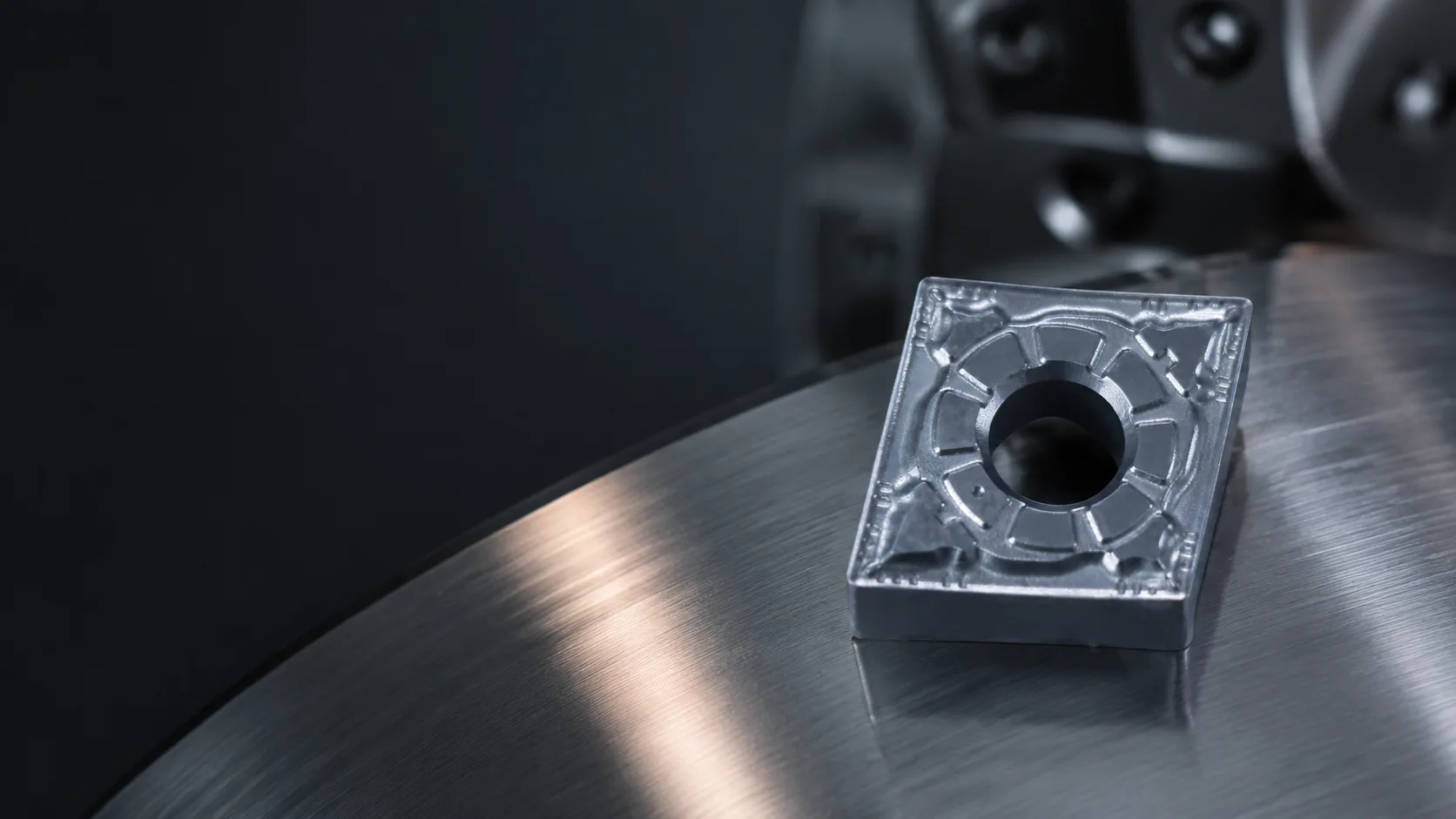
Start with the cut, not the quotation
A carbide-to-cermet discussion may begin with price pressure, a delivery problem, or the need for a second source. Those are valid reasons to review an application, but the cutting edge still decides whether the trial is sensible. Stable steel finishing and some semi-finishing work can be reasonable starting points; hard interruption or unstable holding may not be.
- Workpiece material and hardness
- Operation and finished feature
- Continuous or interrupted cut
- Current insert code, geometry, and cutting data
- The real reason the current solution is being reconsidered
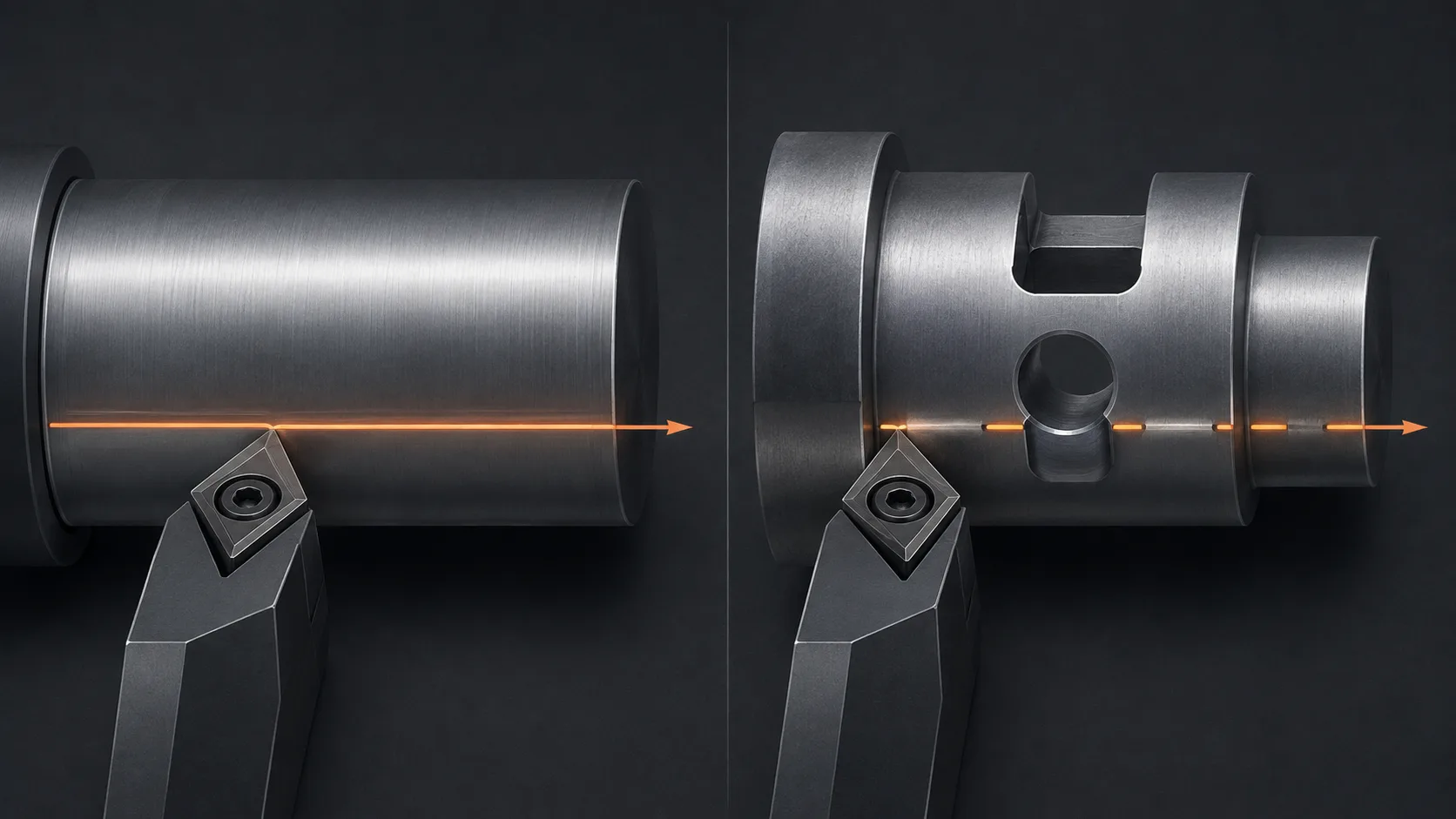
Decide what needs to improve on this part
"Lower cost" is not a trial target. A lower unit price can disappear if the change adds sorting, inspection, rework, or an unplanned stop. State one or two outcomes in the language of the plant: a cleaner finished surface, a more predictable insert change point, or a qualified alternative for a program dependent on one source. Purchasing and machining should agree on the target before the first sample is installed.
Treat the current insert as the benchmark
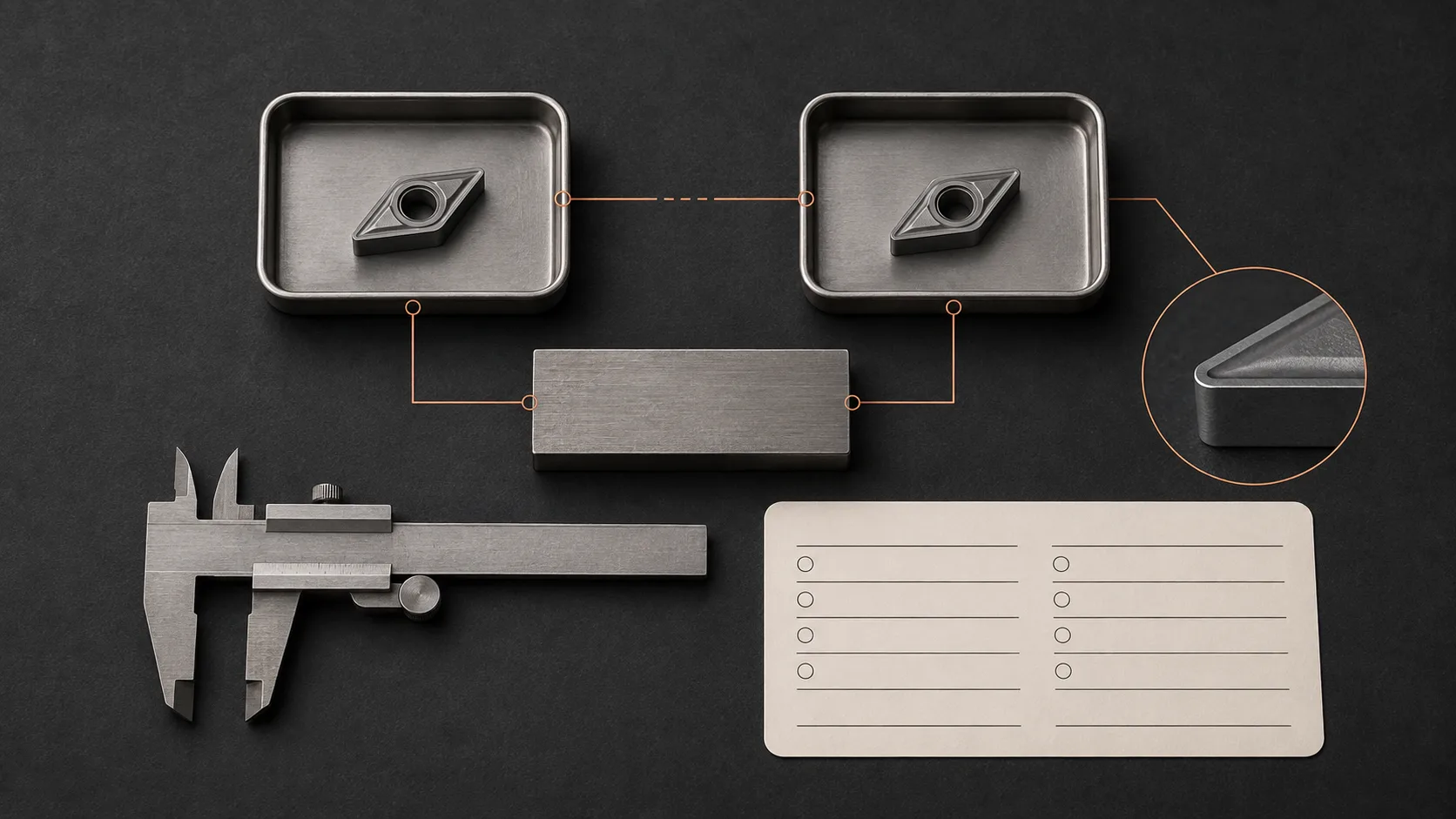
The grade, geometry, cutting data, acceptable edge condition, and typical failure mode of the current insert are the reference point. Keep the same part, machine, holder, clamping arrangement, coolant approach, and inspection method where possible. If parameters change, record why. A small trial log is more useful than an impressive-looking test report with no comparable baseline.
Geometry is part of the material decision
Asking for a cermet equivalent to a current carbide insert is a helpful starting point, not a complete specification. Chipbreaker, corner radius, edge preparation, feed, and depth-of-cut window all influence the result. A promising cermet material paired with the wrong geometry can make a fair application look weak for the wrong reason.
Approve the next order, not only the first sample
A sample can show potential. A purchasing decision has to consider whether the same result can be repeated. Once an evaluation passes the agreed criteria, review how the insert is identified across orders, which dimensions and edge details are controlled, what replenishment arrangement is expected, and how drawing changes or first-piece approval are handled.
- Send the current insert code and a photo if available
- Include workpiece material, hardness, operation, speed, feed, and depth of cut
- Share a drawing or a clear description of the finished feature
- Add wear, chipping, surface, or chip photographs when they explain the problem
Technical RFQ
Turn this note into an RFQ discussion.
Send the current insert code, drawing, material group, replacement target, and expected quantity so NEXEMET can review the cermet option.
Send a Technical RFQ